
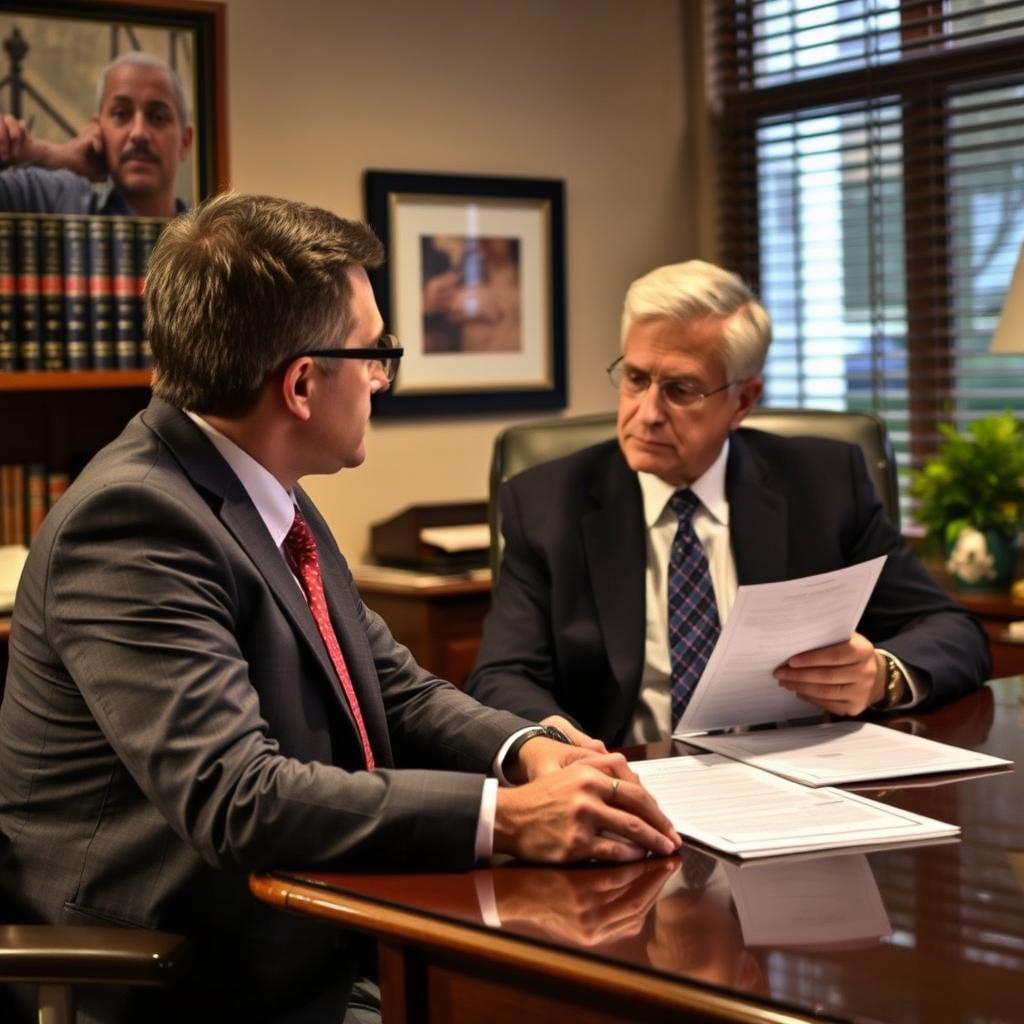
Traumatic Brain Injury Lawyer Fauquier County, VA
When a car crash, fall, or workplace accident in Fauquier County leaves a person with a traumatic brain injury, the road ahead can be overwhelming. The injured individual and their family face mounting medical bills, lost income, and uncertainty about long‑term care. Law Offices Of SRIS, P.C. represents individuals in Fauquier County who have suffered traumatic brain injuries, helping them pursue compensation from the parties whose negligence caused the harm. We do not defend drivers or employers; our practice concentrates on securing financial recovery for injured people. Virginia’s pure contributory negligence rule—which bars recovery if the plaintiff is even one percent at fault—makes knowledgeable representation especially critical in a brain injury case where the facts are often disputed. Anyone considering a claim should be aware of the two‑year statute of limitations under Va. Code § 8.01‑243(A). Reach our Fairfax location at (888) 437‑7747 to arrange a consultation. Law Offices Of SRIS, P.C. – Advocacy Without Borders.
What Traumatic Brain Injury Representation Means in Fauquier County
A traumatic brain injury (TBI) can range from a mild concussion that resolves in weeks to a severe injury requiring lifetime medical support. In legal terms, the injury gives rise to a civil claim for damages against the person or business whose wrongful act caused the harm. Because Fauquier County lies in the Twentieth Judicial District, claims arising from accidents in Warrenton, New Baltimore, Bealeton, Marshall, The Plains, or anywhere else in the county are filed in either the Fauquier County General District Court (for amounts within the statutory jurisdictional limit) or the Fauquier County Circuit Court for larger claims. The Circuit Court at 6 Court Street, Warrenton, VA 20186, presided over by judges of the Twentieth Judicial District, handles the most serious brain injury lawsuits.
Fauquier County General District Court has concurrent jurisdiction over personal‑injury claims within statutory limits, exclusive of interest and attorney fees; claims exceeding those limits proceed in the Circuit Court.
Source: Va. Code § 16.1‑77(1). Virginia Legislative Information System
Reviewed by Mr. Sris, admitted in Virginia, Maryland, the District of Columbia, New Jersey, and New York.
Building a brain injury claim demands thorough investigation. Medical records, neuroimaging, and cognitive‑function assessments must be reviewed alongside accident‑reconstruction evidence to establish both liability and the full scope of the injury. Virginia’s contributory‑negligence doctrine, codified at Va. Code § 8.01‑38, means that any fault attributed to the injured person—even a minor misjudgment—completely bars recovery. This rule places an early premium on preserving all evidence and identifying every potential witness. Unlike many other states, Virginia does not cap compensatory damages in ordinary personal‑injury cases, so a plaintiff who proves liability may recover for past and future medical expenses, lost earning capacity, physical pain, emotional suffering, and long‑term care needs.
How Mr. Sris and His Of Counsel Handle Traumatic Brain Injury Cases
Mr. Sris and his Of Counsel approach each brain injury matter with a focus on the medical and vocational evidence necessary to tell the client’s story. From the first consultation, they work to secure accident reports, photographs, surveillance footage, and electronic‑data records before evidence is lost. They coordinate with treating neurologists, neuropsychologists, and life‑care planners who can explain the injury’s impact in terms a jury can understand. Once the medical picture is clear, they build a demand package and begin negotiations with the at‑fault party’s insurance carrier. If a fair settlement cannot be reached, they are prepared to file a Complaint in the appropriate Fauquier County court and move the case through discovery, motion practice, and trial.
Throughout the process, Mr. Sris and his Of Counsel remain mindful of the contributory‑negligence risk. They carefully examine every fact that the defense might use to shift blame onto the client and develop responsive arguments early. Their experience in civil litigation across Virginia—including cases before the Fauquier County courts—helps them anticipate the procedural turns that a brain injury lawsuit can take. While no attorney can promise a particular outcome, the team works methodically to position each client for the strongest possible resolution. Results may vary.
About Mr. Sris and His Of Counsel Team
Mr. Sris, Owner and Founder of Law Offices Of SRIS, P.C., established the firm in 1997. A former prosecutor, he brings firsthand trial experience that informs the firm’s civil‑litigation practice. Over the years Mr. Sris has testified before the Virginia House Courts of Justice Committee in support of 2019 HB 635 (chief patron Del. David Bulova), a measure that updated Virginia’s equitable‑distribution statute. He is admitted to practice in all five firm jurisdictions—Virginia, Maryland, the District of Columbia, New Jersey, and New York—and has built a team of Of Counsel who support clients in Fauquier County and across the Commonwealth. Mr. Sris and his Of Counsel bring over 120 years of combined legal experience, supported by 4,739+ documented firm-wide results. Results may vary.
Frequently Asked Questions
What is the statute of limitations for a traumatic brain injury claim in Fauquier County, Virginia?
An action for personal injury in Virginia, including a traumatic brain injury claim, must be filed within two years from the date the injury occurred. The two‑year limit is set by Va. Code § 8.01‑243(A) and is strictly enforced. If a lawsuit is not commenced before the deadline, the court will dismiss the claim regardless of its merits. Because brain injuries sometimes produce delayed cognitive symptoms, it is important to seek legal advice soon after an accident to avoid losing the right to recover. For wrongful‑death claims stemming from a fatal brain injury, the limitations period is also two years, running from the date of death under Va. Code § 8.01‑244.
Virginia’s statute of limitations for personal injury is two years from the date of injury.
Source: Va. Code § 8.01‑243(A). Virginia Legislative Information System
Reviewed by Mr. Sris, admitted in VA, MD, DC, NJ, and NY.
How does Virginia’s contributory negligence rule affect a traumatic brain injury case?
Virginia’s contributory negligence doctrine bars all recovery if the injured person is found even one percent at fault for the accident. Virginia is one of only four states, along with the District of Columbia, that still applies pure contributory negligence. This means that if a defense lawyer can persuade a judge or jury that the injured person acted carelessly in any way, the plaintiff receives nothing. In a brain injury case, where the injured person may have little or no memory of the accident, the rule makes it essential to preserve independent evidence—such as photos, video, and witness statements—immediately. An experienced attorney can work to counter assertions of shared fault before they harden into a defense.
What damages can I recover in a Virginia traumatic brain injury case?
An injured person may recover compensation for medical expenses, lost wages, reduced earning capacity, physical pain and suffering, emotional distress, and the cost of future care. In cases involving severe brain damage, plaintiffs often present evidence from life‑care planners, vocational rehabilitation attorneys, and economists to quantify the financial impact over a lifetime. Virginia does not impose a limit on compensatory damages in general personal‑injury cases, though punitive damages are capped by statute under Va. Code § 8.01‑38.1. Wrongful‑death damages can include grief, solace, and loss of companionship. Every case is different, and the actual recovery will depend on the strength of the liability evidence and the available insurance coverage.
Do I need a lawyer for a traumatic brain injury claim in Fauquier County?
You are not required to hire a lawyer, but the complexity of Virginia’s contributory‑negligence rule and the challenges of proving a brain injury make experienced representation strongly advisable. Insurance companies know that if they can persuade a jury that the injured person was even slightly careless, they pay nothing. They often try to obtain recorded statements that can be used later to suggest fault. An attorney who regularly handles brain injury claims can manage communications with insurers, assemble the necessary medical and experienced attorney evidence, and, if necessary, try the case before a Fauquier County jury. Mr. Sris and his Of Counsel offer consultations by appointment; contact our Fairfax location at (888) 437‑7747.
How are traumatic brain injury cases handled in Fauquier County courts?
Claims within the statutory jurisdictional limit may be filed in the Fauquier County General District Court, while larger brain injury claims proceed in the Fauquier County Circuit Court. Both courts are located at 6 Court Street in Warrenton. In the Circuit Court, the typical steps include filing a Complaint, exchanging documents and interrogatories during discovery, taking depositions of parties and witnesses, and participating in mediation if the judge encourages it. Although Virginia does not mandate mediation, many personal‑injury cases settle before trial. If trial is necessary, the case is heard by a judge or a jury. Mr. Sris and his Of Counsel are familiar with the practices of the Twentieth Judicial District courts and can guide clients through each stage.
What should I do after a traumatic brain injury in Fauquier County?
Seek immediate medical attention, follow all treatment recommendations, and do not give a recorded statement to any insurance adjuster without first consulting a lawyer. Even if the injury seems mild at first, symptoms of a brain injury can worsen over hours or days. Document the scene if possible—take photos, collect contact information from witnesses, and preserve any damaged clothing or equipment. Keep a file of all medical records, receipts, and correspondence. If the injury was caused by a car crash, obtain a copy of the Virginia Traffic Crash Report. Early consultation with an attorney helps ensure that evidence is preserved and that the two‑year filing window is not missed. To schedule a consultation, reach our Fairfax location at (888) 437‑7747.
Related Personal Injury Resources
Our firm provides traumatic brain injury representation throughout Northern Virginia. We also serve clients in nearby counties:
- Fairfax County Personal Injury Lawyer
- Prince William County Personal Injury Lawyer
- Stafford County Personal Injury Lawyer
- Loudoun County Personal Injury Lawyer
- Arlington County Personal Injury Lawyer
Verified Legal Resources
Review the official sources used in preparing this page:
Va. Code § 8.01‑243 – Virginia statute of limitations for personal injury · Virginia’s Judicial System – court locations and general information
Attorney advertising. Prior results do not guarantee a similar outcome. Case results depend on a variety of factors unique to each case. Results may vary.